x
x

since 2020
supported across Europe
generated in 2024
across Germany, Belgium, the Netherlands, and Spain
"We were looking for a partner that understands the complexity of modern technology, but also knows how to translate it into a real customer experience. Future Mind has met these expectations – delivering a solution that is not only functional and secure, but above all user-friendly."

Lekkerland was looking for a trustworthy partner for a strategic initiative: refining and preparing the company’s autonomous shop concept for expansion.
As it wasn’t our first time working with autonomous commerce, having previously worked on a related challenge with Żabka, Lekkerland quickly recognized us as the right ones for the job.
We set out to design and develop an entry app for the company’s new autonomous shops to be built all across Germany and possibly other Western European countries.
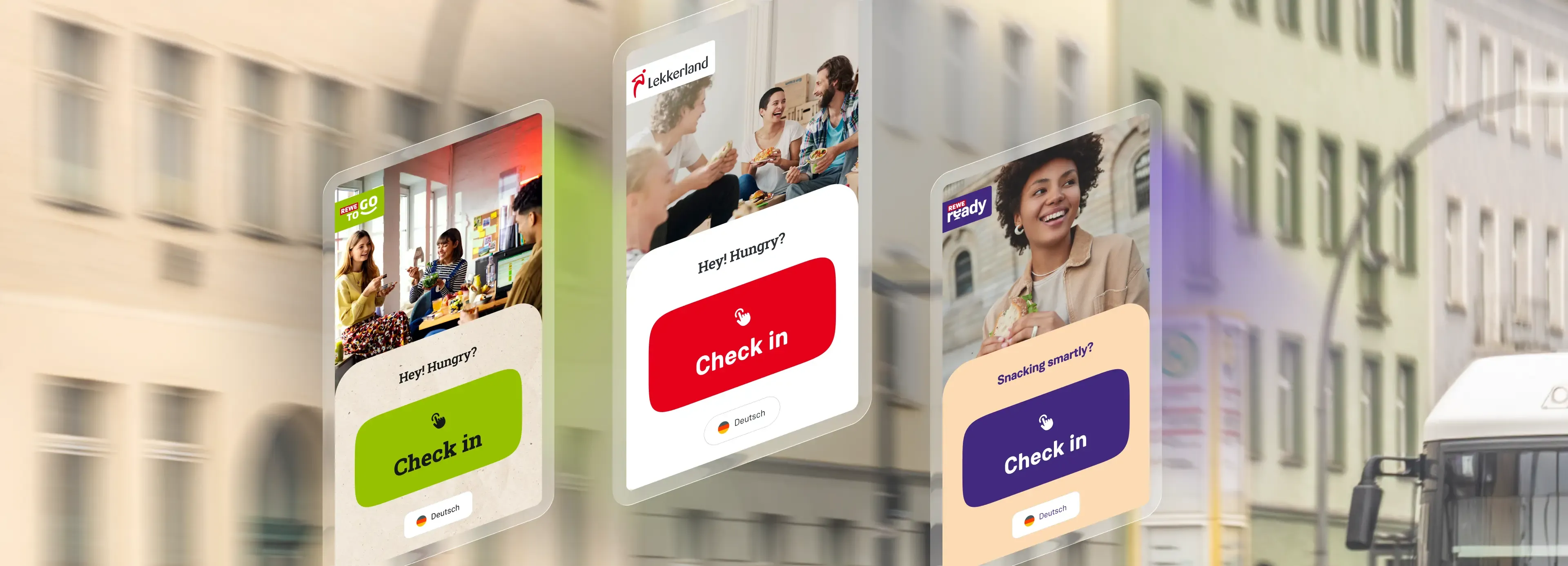

A thorough examination of the entire system and its functionality was necessary at the start of the project, as it would help make in-app processes easy and intuitive. Our experts analyzed all the internal and external software and hardware characteristics necessary for integrating the entry solution. Autonomous shops are intricate systems that need to include sophisticated camera technologies, payment processing platforms, and user-friendly interfaces. Each of these components, along with many others, must be seamlessly integrated to ensure a smooth and efficient shopping experience.
Connecting the systems wasn't the only challenge. Before we could actually integrate them, we needed to analyze each system's characteristics and limitations, which often conflicted with one another. Designing an appropriate architecture for both the Python backend and the Android entry app required significant effort and pushed our engineers to find a way to make it work despite significant difficulties. Fortunately, we had just the experience to figure out an efficient method.
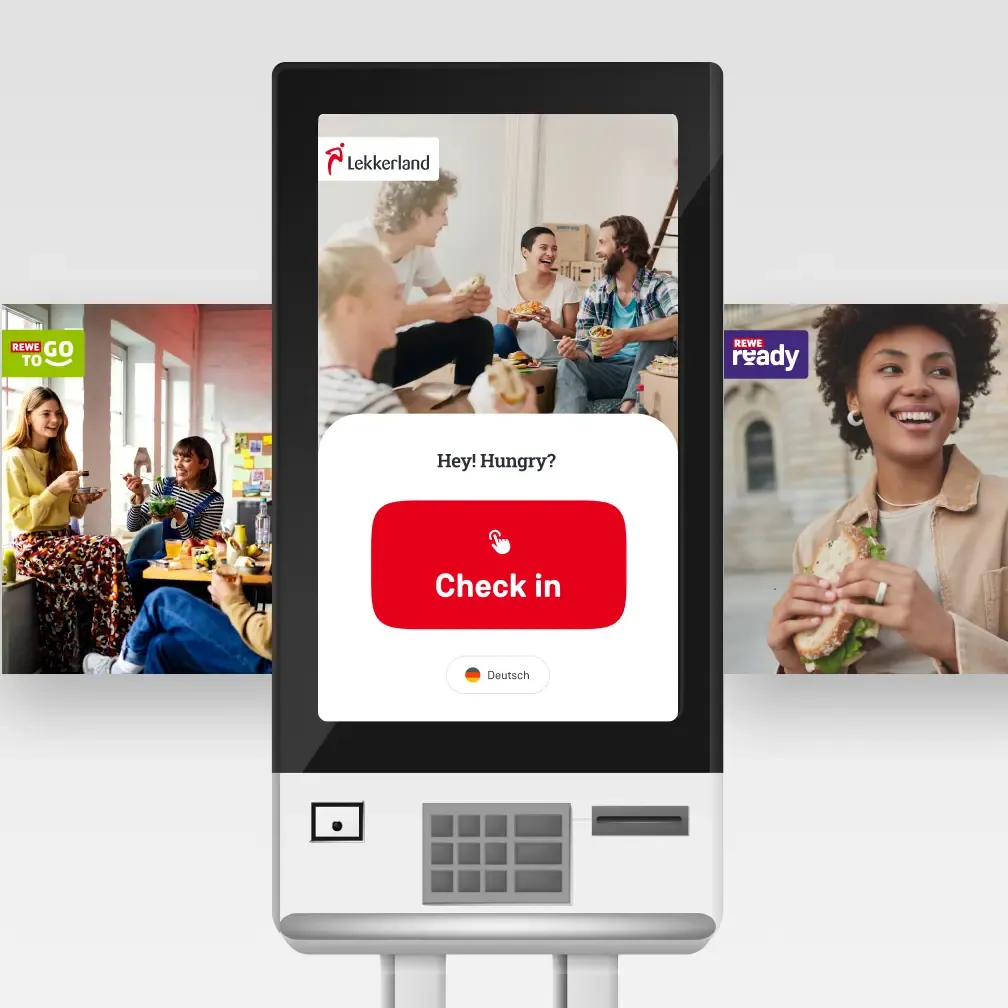
We collaborated with the client at every stage of the project to ensure full compliance with all requirements and quickly arrived at a suitable solution. One of the key necessities was to create a flexible design that would look pleasing to the eye in three different color schemes.
The client’s goal was to use the same project in three differing variations for different concepts: REWE To Go, REWE Ready, and a Lekkerland-branded version for presenting at industry events.
As we worked on the design, we made sure to optimize it for usability and readability. As the user flows were simple, and the product would be used by various demographics, we managed to achieve a minimalist, easy-to-learn interface.
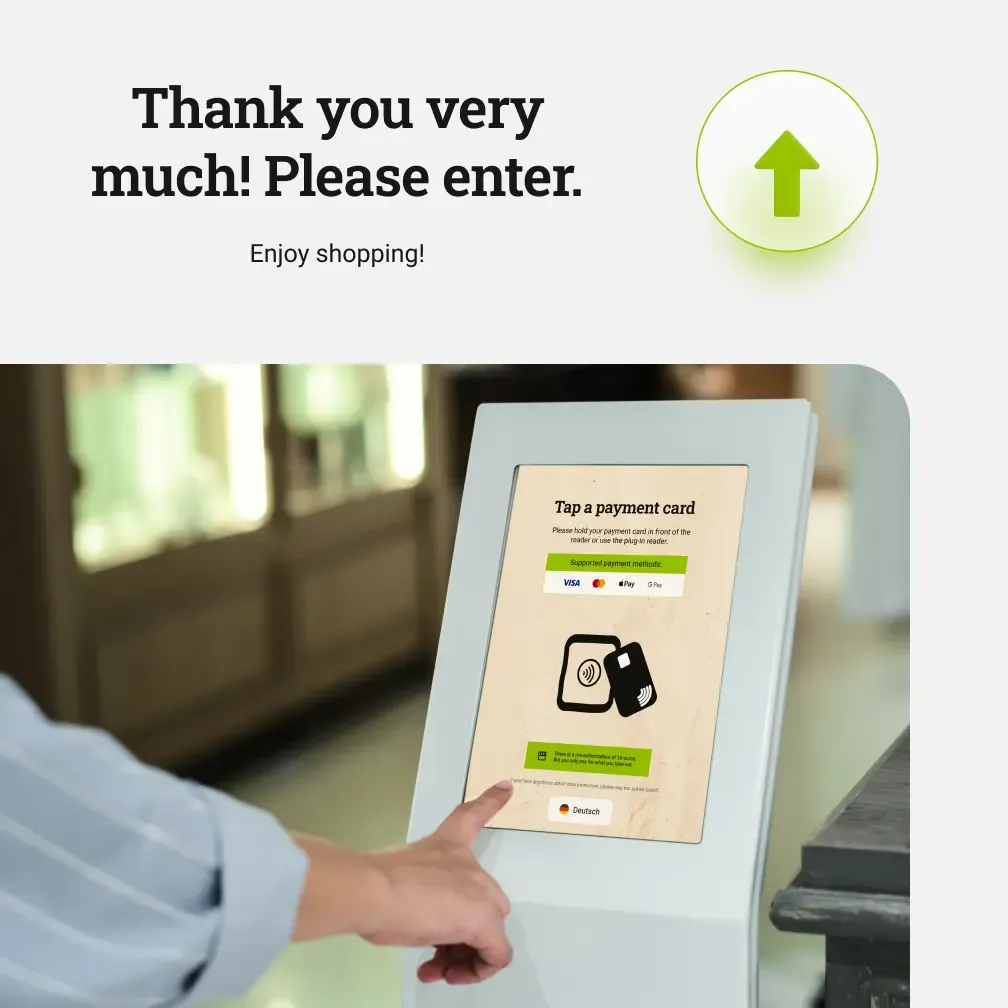
While the application would be Android-based, the hardware that would support it was a computer with a touchscreen monitor. This meant our developers were working in rather unique circumstances – a challenge we thoroughly enjoyed! The devices were provided by Pyramid Computer, a market-leading manufacturer of IT solutions from Germany.
that enable autonomous shopping concepts. Our engineers, having already worked with AiFi's software, quickly integrated it into the entry app. To ensure efficient card authorization and payment upon entry, we integrated the system with Adyen’s terminals – another company we have extensive experience working with.
All throughout the project, our experts took a leading role in pushing the project forward and coordinating responsibilities among the parties involved. We served as a de facto product owner of the development layer and helped ensure all tasks were completed as per the deadlines to deliver the project in a timely manner.

The process is quick and simple: just walk up to the kiosk and scan your card.
The app also supports Lekkerland employees in managing autonomous locations. The hardware includes a QR code reader, allowing company representatives to authorize entry and close a shop for maintenance.