Marcin Zduńczyk
Business Solutions & Customer Data Architect
In 2026, a good loyalty program is a designed experience. That sounds obvious when you say it out loud, but most programs on the market still behave like a transaction with extra steps. They treat loyalty as a mechanic: the customer spends, collects points, and redeems a reward. The card goes into a wallet or an app and stays there. Somewhere in a presentation deck, a chart shows member growth. And yet the relationship with the customer hasn't really changed.
A program that works does two things at once. It rewards the purchase, and it builds a habit and a relationship around it. The transactional layer and the emotional layer run together. When they do, the difference shows up in a single sentence: the customer of a weak program comes back for the discount, and the customer of a good program comes back because they want to.
The programs that feel good to use go past gamification and points. They borrow, deliberately, from behavioral economics. A progress bar that shows how close the next reward is. A countdown that adds a small, pleasant pressure. An occasional bonus the customer didn't quite expect.
These are small design choices, but they line up with how people actually make decisions, and that alignment is what separates programs customers use from programs customers forget they joined.
When a program underperforms, the cause usually sits in one of three places.
If a customer has to read the terms to understand what they are getting, the program has already failed. Every extra condition, every exception, every tier with its own logic is another wall between the customer and the feeling that the program is meant for them.
Complexity doesn't read as exclusivity. It reads as friction, and friction turns into drop-off.
Some rewards take too long to reach and aren't worth the wait when they finally arrive. People respond to what's close, not what's distant. A program that asks a customer to grind for six months to get a reward they feel lukewarm about is working against basic psychology.
The programs that hold attention do two things: they give something small and fast, and they show a clear path to something bigger.
Most big players already know personalization matters. The question is how far they've actually taken it. Some brands haven't moved past the mass send at all. Others did just enough to say they did something, with segmentation that splits customers into a handful of broad groups and calls it personal. Customers pick up on both versions quickly. The loyalty program stops feeling like it was built for them and starts feeling like it was built for a boardroom report.
In a world where every other app on a phone learns preferences within days, anything less than granular, individual-level communication is a signal that the brand is falling behind.
Those three problems share a root. If a customer can't see in a few seconds what to do and what they get for doing it, they won't do anything. The best programs have one main mechanic and fast feedback. Nothing more complicated than that.
A good illustration is the apps that use the phone's gyroscope: you shake the device and win a reward. There is nothing to explain. The interaction itself is the explanation, and the response is immediate. It works because it respects what customers are up against on a phone screen, which is dozens of other apps asking for the same attention. The question a designer should be asking isn't "what can we offer?" It's "what will the customer understand without thinking?"
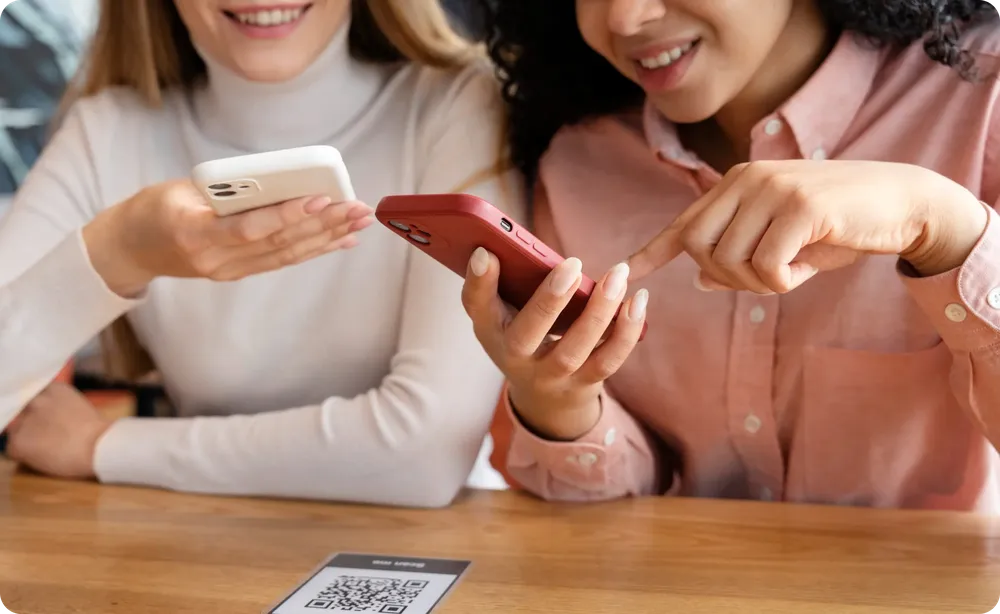
This is where technology stops being an add-on and starts being what holds everything together. Personalization at the level I described needs a view of the customer that isn't broken into pieces. What they bought online, what they bought in a store, when they were last active, what they opened, what they ignored. All of it in one place.
The stack that makes it work today is familiar: a marketing automation platform, with behavioral data flowing into it, and an AI layer handling the decisions that used to sit in spreadsheets. The shift in logic is the part that matters. A brand stops sending everyone the weekend offer and starts sending a specific person a specific offer at the moment they usually buy. The customer doesn't need to know any of this. They only need the feeling that the brand understands them, and that feeling, more than a catalog of rewards, is what keeps people in a program.
The direction for the future is already visible in the market, in small ways. Insurers lower premiums for customers who walk, cycle, or sleep well. There are banks that pay an annual bonus to customers who make a deposit into their savings account for eleven months in a row. The mechanics stay the same. Points, tiers, rewards. What shifts is the meaning underneath. The deal with the customer starts to sound less like "buy more, get more" and more like "live the way you want to live, and we'll encourage you."
The measure of loyalty is moving with it. It used to be how much the customer spent. Now, it is becoming about how naturally the brand fits into their day. Brands that are building toward that now, with the fundamentals in place, are the ones that will be there when the shift finishes arriving.

J. Nawrocki - Lead UX Researcher

I. Franke - Head of Advisory

P. Wasilewski - Head of Solutions
M. Michałowski-Żuk - Customer Experience Manager